
December 7, 2020
Are You Eating Enough Fiber?

I remember being in my 20’s grabbing a fiber granola bar from the store because I had heard that fiber was important (but didn’t know why). I ate that bar in the afternoon and hit the gym. And oh my gosh! I was miserable! I was extremely gassy and bloated and had a tummy ache the rest of the night. I swore off any fiber-boosting bar again! But really, I had a lot I needed to learn about fiber. Given my less-than-optimal diet and the constant gut issues I was dealing with when I ran, it’s no wonder that the fiber bar made me feel like poop.
What is Fiber?
There are 3 main groups of macronutrients that provide nutrients and energy: fats, carbohydrates, and proteins. Fiber is a component of carbohydrates. While carbs are typically digested into sugars, fiber is a component that the body cannot digest. In fact, fiber can actually regulate how your body utilizes the sugar in carbohydrates.
But don’t misconstrue my words here.
While fiber is a component of carbs, not all carbs contain fiber. I don’t want you eating a bowl of candy and thinking you are getting all kinds of fiber. Fiber comes from plants, not Sour Patch Kids. Before we get into sources of fiber, let’s further break down fiber and its important roles.
The Difference Between Soluble and Insoluble Fiber
Fiber can be categorized as soluble or insoluble. Soluble fiber dissolves in water and becomes gelatinous, while insoluble fiber does not dissolve in water.
Soluble fiber helps with blood sugar regulation and is important for healthy cholesterol levels(by binding to cholesterol in bile). Insoluble fiber attracts water and can alleviate constipation. Insoluble fiber can also increase insulin sensitivity, which also affects blood sugar regulation.
Most plants contain soluble and insoluble fiber, but in varying amounts. Think of fiber as your sponge to sop up toxins and wastes to move them along in our GI tract.
What Are the Benefits of Fiber?
Fiber has many health benefits that are particularly beneficial to the gut.
Fiber Normalizes Bowel Habits
You should be pooping 2-3 TIMES PER DAY! The normal transit time from ingestion to elimination is 12-24 hours. If you are not, you may be constipated. Transit time of less than 12 hours (diarrhea), if chronic, can lead to malabsorption of nutrients.
Dietary fiber also increases the size and weight of your fecal material, which is easier to pass.
Fiber Decreases Colon Cancer Risk
I’m going to say it again, in case you forgot: you should be pooping 2-3 times per day. Your fecal material contains toxins, bacteria, excess hormones, and additional wastes. The longer the waste sits in your colon, the more likely those wastes are going to be reabsorbed by your body. If your transit time is greater than 24 hours, you are at greater risk for colon disease and an increased toxic burden.
Fiber Aids in Weight Management
High-fiber foods are more filling and slow down the digestion of carbohydrates. Being more satiated with food and blood sugar control can also support a healthy weight and decrease the chances of developing type 2 diabetes.
Fiber Feeds the Gut Bacteria
Some fibers are fermentable (prebiotic), which feed the good bacteria of the gut. Gut bacteria produce short-chain fatty acids that support healthy blood glucose and cholesterol levels, a thriving microbiome, and immune health.
How Much Fiber Do I Need?
So, how do you know if you are getting enough fiber? Beyond tallying your daily fiber intake per day, you can also look at the story your poop is telling you. Yes, I want you to look in the toilet and take note of the size, shape, and texture of your poop. You can reference this Bristol Stool chart to see how your poop compares.
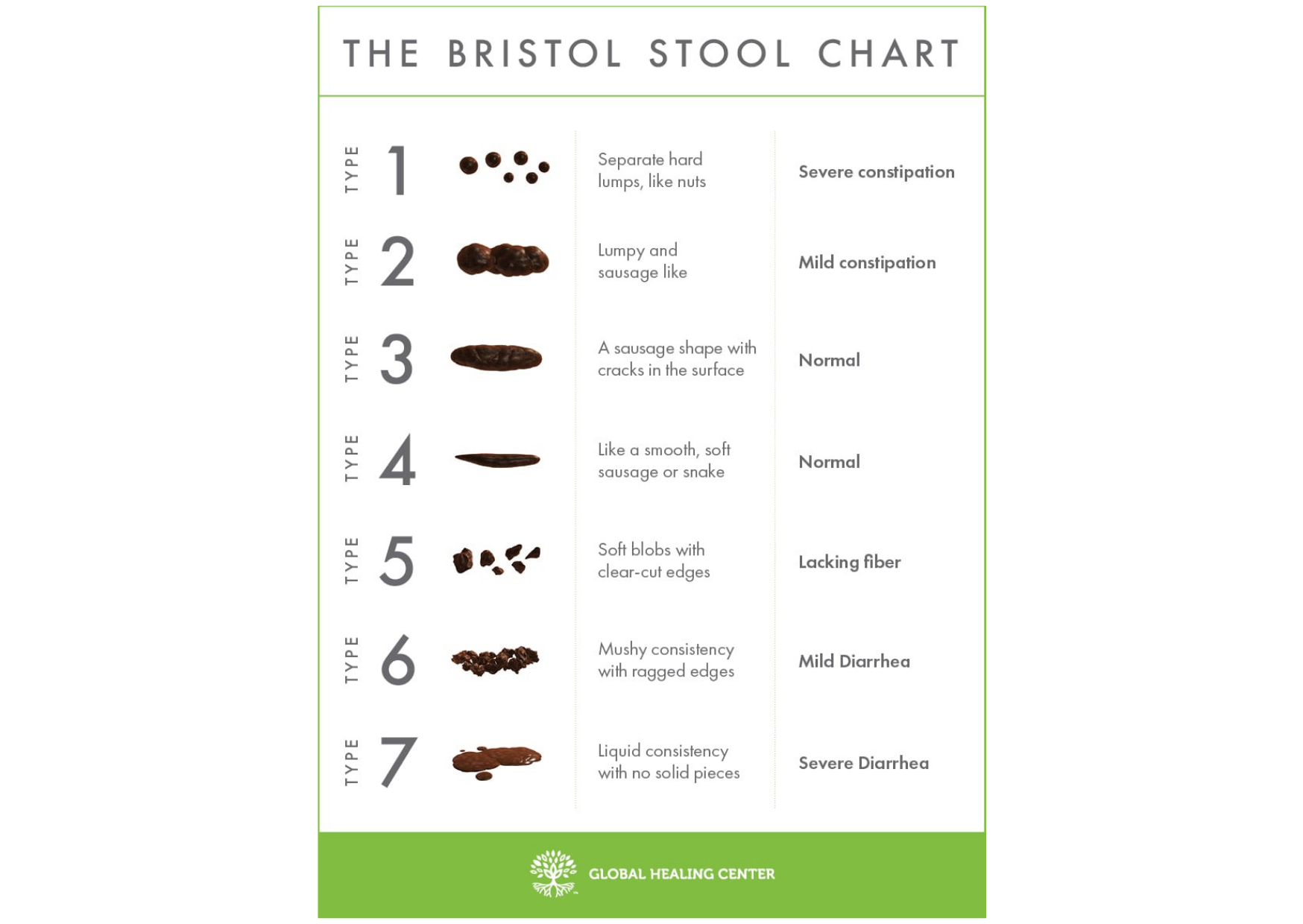
Women should aim to get 24 grams of fiber daily while males should aim for 35 gram of fiber daily.
Here are some foods that provide excellent sources of fiber.

Can Fiber Cause Constipation?
Now that you have an understanding of why fiber is important and some sources, you can start increasing your fiber consumption. You want to start low and slow if you do not currently have a diet high in fiber, as your body will need to adjust. Remember how I ate that fiber bar and had some negative GI side effects? I increased my fiber intake way too fast, and my body could not process it well.
To help balance the effects of fiber, you also want to make sure you drink half of your weight in ounces of water every single day. Being dehydrated can lead to constipation in general, but even more so with an increased fiber intake as well.
Also important to note is that a lot of high-fiber foods are also high FODMAP (fermentable oligo-, di-, mono- saccharides, and polyols) foods. FODMAP foods refer to how the carbohydrates of the food are structured.
If you are experiencing an increase in gas and bloating that does not resolve as you increase your fiber, you may want to explore SIBO (small intestine bacterial overgrowth) as a culprit.
nutrition services
Catch me here →
meet the blog author:
a certified nutrition therapy practitioner


Leave a Reply
X
X


© BEE COLLECTIVE WELLNESS 2025
CRAFTED BY BOOTH AND BARD
Add a comment
0 Comments